By Yolande Clark-Jackson
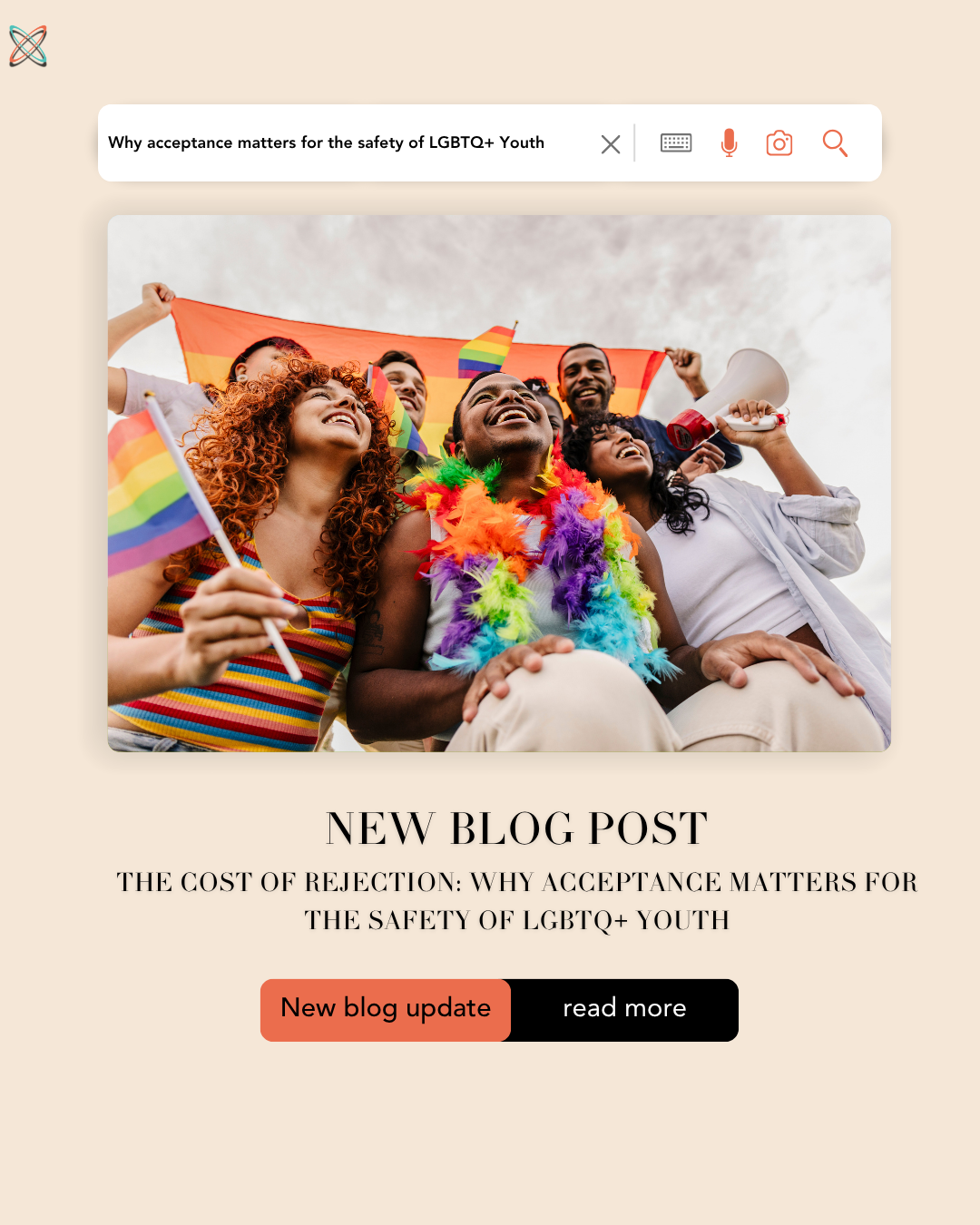
When a young person knows they are different, they already may feel a sense of isolation from their peer group. But it’s worse when they feel that same sense of isolation in their own families. For many LGBTQ+ youth who discover their identities in adolescence, feeling accepted for who they are is what they want most. Unfortunately, they don’t always feel accepted by those closest to them, which puts them at risk for suicide.
The Library of Medicine says, “...interpersonal and structural discrimination burden one’s allostatic load, and result in painful thoughts and feelings about one’s worth, sense of belonging, and hope for the future.” Simply put, not feeling accepted can lead to not feeling worthy of living.
The need for acceptance
No one wants to experience feelings of rejection, but young people are often less equipped to deal with feelings of sadness related to things they can’t change. They can’t change who they are and they can’t change the minds of those around them. They often don’t have the tools to handle the mental health impact of being rejected by friends, family members and even their community.
Jacqueline Hunter-Lewis, licensed associate marriage and family therapist for Ibisanmi Relational Health says the reluctance to prioritize mental health in families can be a challenge for teens struggling.
“In the Black community, there has been a stigma attached to mental health," says Hunter. It’s often believed that a person doesn’t need to seek professional help if they trust in God. Many of those who are willing to seek help, don’t have the resources needed,” she adds.
Hunter also points out that teens who consider suicide are often seeking an end to the feelings they are experiencing and don’t see any other way out.
“They lack the tools to find other solutions,” says Hunter. “Many feel isolated and unsupported by those in their circles of interaction. Less than half of the teens who die as a result of suicide were diagnosed with mental health issues making it important for loved ones to know what other factors to look for,” she adds.
LBGTQIA+ youth who feel rejected from former friend groups and family members are at an increased risk of suicide and suicidal ideation.
The cost of rejection
One in 5 transgender and nonbinary people age 13-24 attempted suicide in 2022, almost twice the rate of cisgender youth, according to a 2023 national youth survey by the Trevor Project.
The Trevor Project’s 2025 U.S. National Survey on the Mental Health of LGBTQ+ Young People amplifies the experiences of more than 16,000 LGBTQ+ young people ages 13 to 24 across the United States.
“LGBTQ young people are not inherently prone to suicide risk because of their sexual orientation or gender identity but rather placed at higher risk because of how they are mistreated and stigmatized in society,” the organization said in the survey results.
The report highlights some startling statistics:
1 in 10 LGBTQ+ young people attempted suicide in 2025.
36% of LGBTQ+ young people seriously considered attempting suicide in the past year, including 40% of transgender and nonbinary young people.
44% of LGBTQ+ young people who wanted mental health care in the past year were not able to get it.
59% of LGBTQ+ young people ages 13-17 experienced bullying in the past year, and those who did reported significantly higher rates of attempting suicide in the past year than their peers.
90% of LGBTQ+ young people said recent anti-LGBTQ+ laws, policies and debates caused them stress or anxiety.
LGBTQ+ young people of color attempted suicide at higher rates than their White peers, and nearly a third (32%) experienced racial or ethnic discrimination.
Some signs of a suicidal teenager
No two suicidal teenagers will exhibit the exact same signs, but you can look for patterns of behavior that let you know that something isn’t quite right.
Withdrawal: You may notice increased separation from friends (particularly important) and family (this is also part of adolescent behavior so keep it in mind, but it’s not the only sign).
Reversal: Unlike adults who might look sad or depressed, you are more likely to see irritability in adolescents versus a sad or depressed mood. This goes for their social media activity as well, where teens quite often go to express feelings about themselves and outlook on life. If you notice a big change in their mood, pay attention.
What they might say:”What’s the point?” “Why am I even here?” or “Maybe it would be easier for everyone if I just wasn’t here.” Also listen for statements like, “I just wish the pain would stop” or “I don’t want to be here anymore.” They may not use the words “I’m going to kill myself,” but what they say may hold the same sentiment.
What they might not know how to say: “I need help.” “I’m scared of what I might do.” “I want to hurt myself.” or “I don’t feel safe alone with my thoughts.” These are phrases you have to teach them to say.
How to create a supportive and inclusive community for LGBTQIA Youth
Building a supportive and inclusive community for LGBTQIA youth requires a collective effort from families,schools, churches and community organizations.
Family therapy can play a critical role in this process by empowering families to communicate and navigate the challenges they face and remind young people they don’t have to face the world on their own.
Therapy can help them embrace their identities, foster self-acceptance, and promote mental well-being. Through community initiatives, support groups, and advocacy efforts, we can work towards creating a more welcoming environment for LGBTQIA youth to thrive.
At Ibisanmi Relational Health, we want to advocate for the health, safety and well-being of LGBTQIA youth.
If you or your loved one could benefit from family therapy, book a free consultation with one of our culturally affirming therapists. Click here to get started.
“The lack of discussion surrounding suicide and depression in New Jersey, specifically in the Black community, is a problem,” said Dr. Christiana Ibilola Awosan. “We need to start normalizing having these conversations around mental health.” -NJ.com