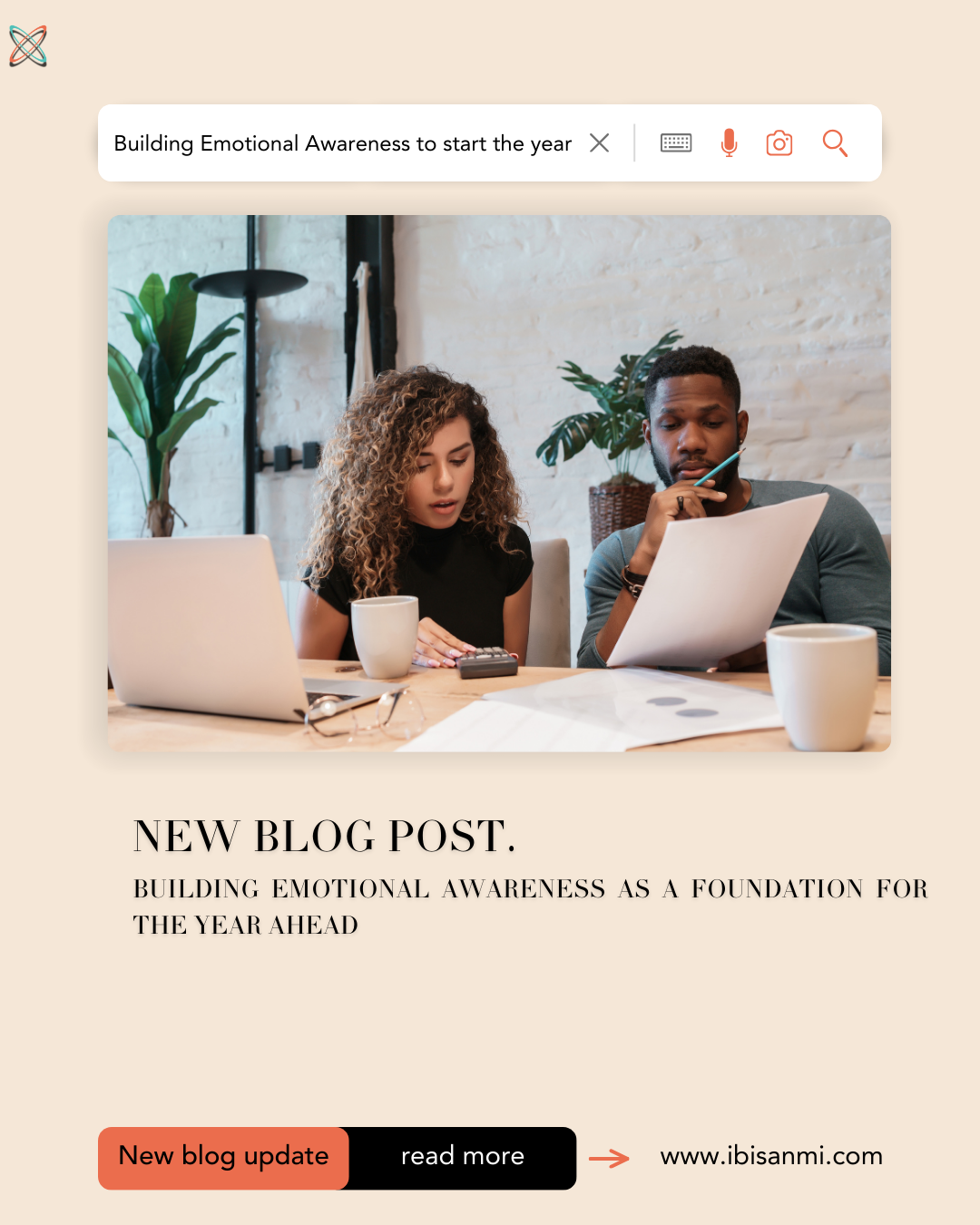
Building Emotional Awareness as a Foundation for the Year Ahead
By Yolande Clark-Jackson
January arrives with an invitation and closes with great expectations. It’s the month that asks us to reflect on where we’ve been and imagine where we’re going. Some of the loudest goals often focus on making more money or losing more weight. But the most transformative growth often begins somewhere quieter: in our emotional awareness.
Emotional awareness is the ability to recognize, understand, and navigate our feelings as they arise. It’s what allows us to pause before reacting in anger, to identify the grief beneath our irritability and fear, or to understand why certain relationship patterns keep repeating. This foundational skill transforms how we connect with partners, family members, and ourselves.
For many people, the journey toward emotional awareness accelerates in therapy. Therapy can become a structured pathway toward understanding the emotional currents that shape relationships and choices. Because when you can name what you’re feeling and understand its origin, you gain the power to make intentional choices rather than reactive ones.
Family and relationship therapist, Christiana Ibilola Awosan points out that this includes understanding how your cultural background and identity influences your emotional landscape.
Why January? Why Therapy? Why Now?
There’s something psychologically significant about January that makes it an ideal time to invest in personal growth. The new year represents a natural threshold, a moment when we’re already primed for reflection and change. Rather than letting that momentum melt by March, therapy offers a way to channel it into sustained transformation.
Consider this: many of us set goals in January and February, but how many of us create an actual structure and partnership for achieving them?
Therapy provides both. When you work with a therapist who understands how socio-cultural differences shape relationship dynamics or how your cultural values around communication, conflict, or family loyalty might differ from your partner’s, you’re building a personalized roadmap for navigating the complexities of your specific relationships and life context.
The “why now” question has another answer too. Perhaps you’ve noticed patterns you want to break, conflicts that keep resurfacing, or a sense that you’re not showing up as your best self in your relationships. Now is the time to make those underlying patterns more visible. It’s time to say: this year, I’m going to understand myself better so I can love better, communicate better, and live more authentically.
Related: Not Starting Over, Starting With You: How to redefine the new year on your terms
Your Therapist as Your Empowerment Partner
Reframing therapy as an empowerment partnership changes everything. Seeing your therapist as a structured guide and collaborator in your growth means that collectively you can create clarity around your emotional patterns, develop skills for healthier communication, build the awareness that allows you to make choices aligned with your values and see progress.
To make the most of this empowerment partnership, consider these actionable steps:
Commit to consistency. Emotional awareness builds over time, not in a single session. Schedule regular appointments and treat them as non-negotiable investments in yourself. Growth happens in the accumulation of small insights and practiced skills.
Come prepared to be curious. Bring your real struggles, your relationship conflicts, and your moments of confusion. The messiness is where the learning happens. Your willingness to examine difficult emotions and patterns is what creates breakthroughs.
Practice between sessions. The work doesn’t end when you leave my office. Try the communication techniques we discuss, notice your emotional responses in real-time, and bring those observations back to our next session.
Honor your cultural context. Awosan stresses that your background is valuable context for understanding how you navigate relationships.
Share your cultural values and experiences openly, especially when you notice tensions between different cultural expectations in your life.
Set specific, emotional goals. Instead of vague aims like “be happier,” try goals like “I want to express my needs without guilt” or “I want to understand why I withdraw during conflict.”
Specific goals provide clear direction and allow you to measure your growth.
As we move more deeper into this new year, emotional awareness remains the foundation that supports all other growth. It’s what allows you to build stronger relationships, navigate cultural differences with grace, and show up as the partner, parent, or family member you want to be.
If you’ve been considering therapy, consider this your invitation and reminder. This is the moment to invest in understanding yourself more deeply, to build the emotional awareness that will serve you all year long and beyond.
Ready to find your empowerment partner?
If you’re in NY/NJ and are looking for a licensed therapist, reach out to our team at Ibisanmi Relational Health. Our therapists in New York and throughout New Jersey specialize in working with BIPOC individuals, first-generation professionals, and anyone navigating the complexity of multiple identities.
Schedule a free consultation to see if we’re the right fit.
Call: (917) 310-2662 |Book online